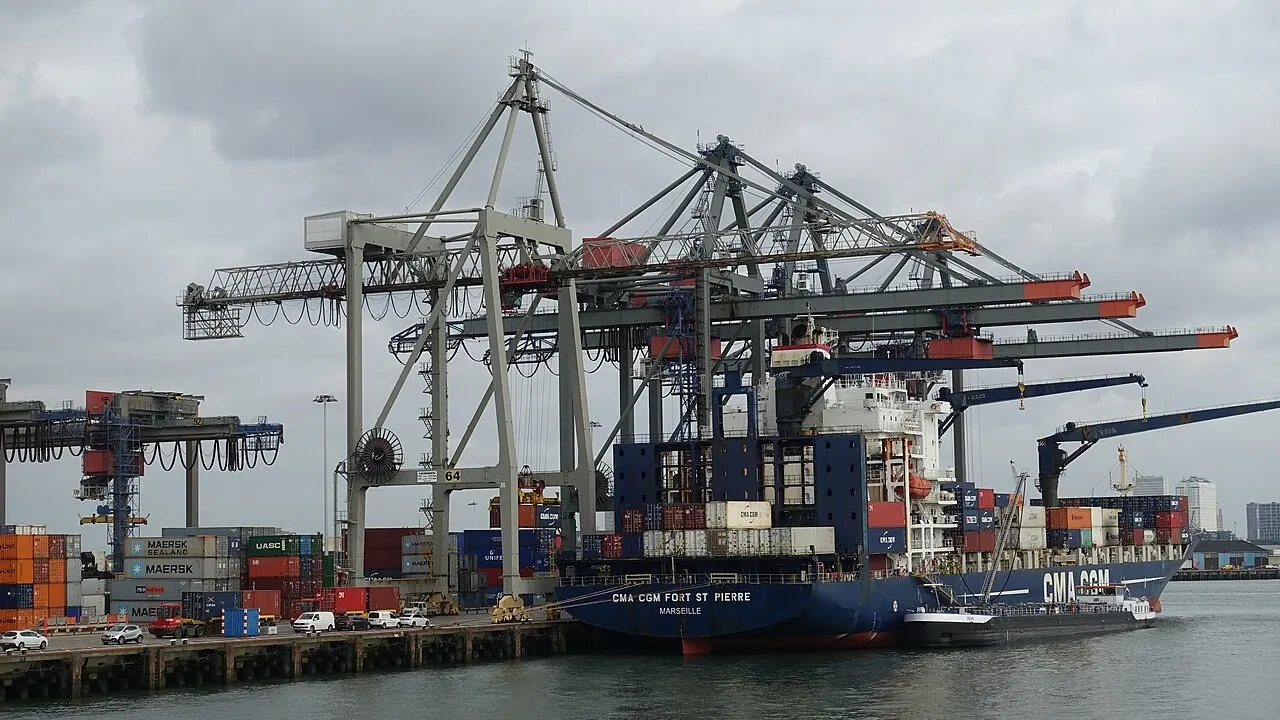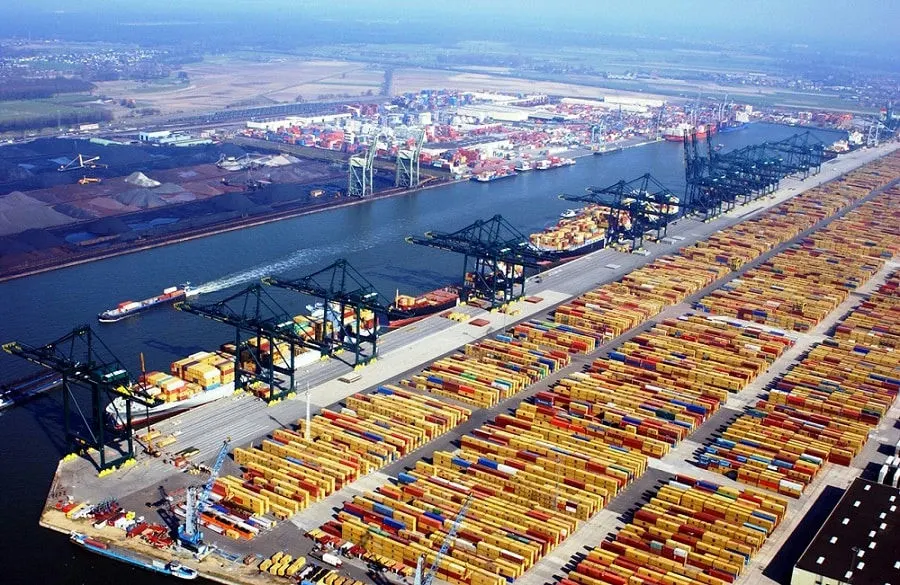
Europe’s largest port, seen from a visitor center’s rooftop deck overlooking terminals and industry.
Why It Matters
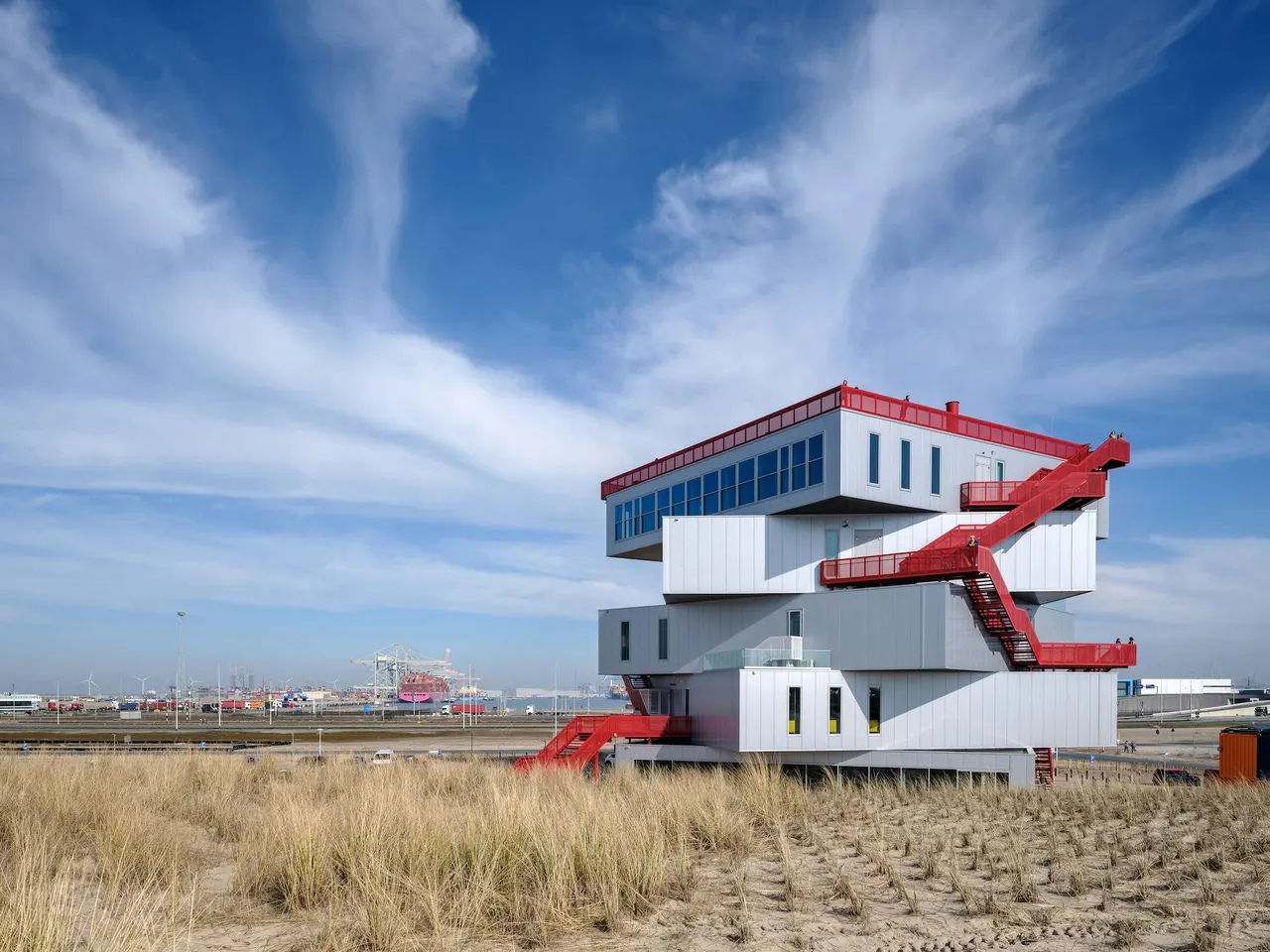
Much of what reaches Rotterdam by sea moves on by inland shipping, rail, road and pipeline, with most coal and part of the crude oil bound for Germany. Portlantis, the port authority’s visitor center, shows how cargo reaches the port and offers a view over it from a deck.
Largest EU port by freight in 2024, with 397 million metric tons against 244 million for Antwerp-Bruges. About 30 percent of Northwest Europe’s containers pass through it.
Pipelines carry about half of the crude oil to refineries in the port, the rest to refineries in Vlissingen in the Netherlands, Antwerp and Germany. In 2025, 101 million metric tons were handled.
About 90 percent of the coal arriving goes on to Germany, roughly half for steelmaking, half for power plants. A terminal owned by German steelmakers handles their iron ore and coal.
About 75 seagoing ship calls a day across the Port of Rotterdam in 2025; inland vessels made an average of about 257 calls a day.
240 million cubic meters of sand went into the first phase of Maasvlakte 2; the whole extension covers about 2,000 hectares.
30 percent more energy is generated on site than the Portlantis building uses, largely by a wind turbine.
32 kilometers of hydrogen pipeline opened in May 2026, the first section of a planned 1,200-kilometer Dutch network.
What You Experience
Themed areas cover shipping, cargo, industry and infrastructure, and show which everyday products arrive through the port. Visitors can try piloting a ship into port.
A motion-seat ride shows a vision of the future of transport with fast images, sound and light.
Information along the staircases introduces cargo, containers and the building of Maasvlakte 2; the deck looks out over the port, sea, beach and dunes.
This additional bus tour, with its own ticket, stops at a dredging depot or a container terminal, depending on the day.
This additional boat trip, with its own ticket and a Portlantis guide, shows container terminals in full operation, foundation piles for offshore wind turbines and a biofuel producer’s expansion.
What You Need to Know
Access & Logistics
Details may change. Check the operator’s website before visiting.
Why it matters
What the visit covers
Worth knowing
Plan Your Visit
Port of Rotterdam
Image credits
Photo: Ron2000, CC0 1.0 (creativecommons.org/publicdomain/zero/1.0), via PxHere (pxhere.com/en/photo/1670596)
Photo: Ossip van Duivenbode